We are digital piano & keyboard specialists, based in Banbury, Oxfordshire. Stay up to date with the latest
news, reviews, tips, and offers by joining our FREE newsletter (unsubscribe at any time).
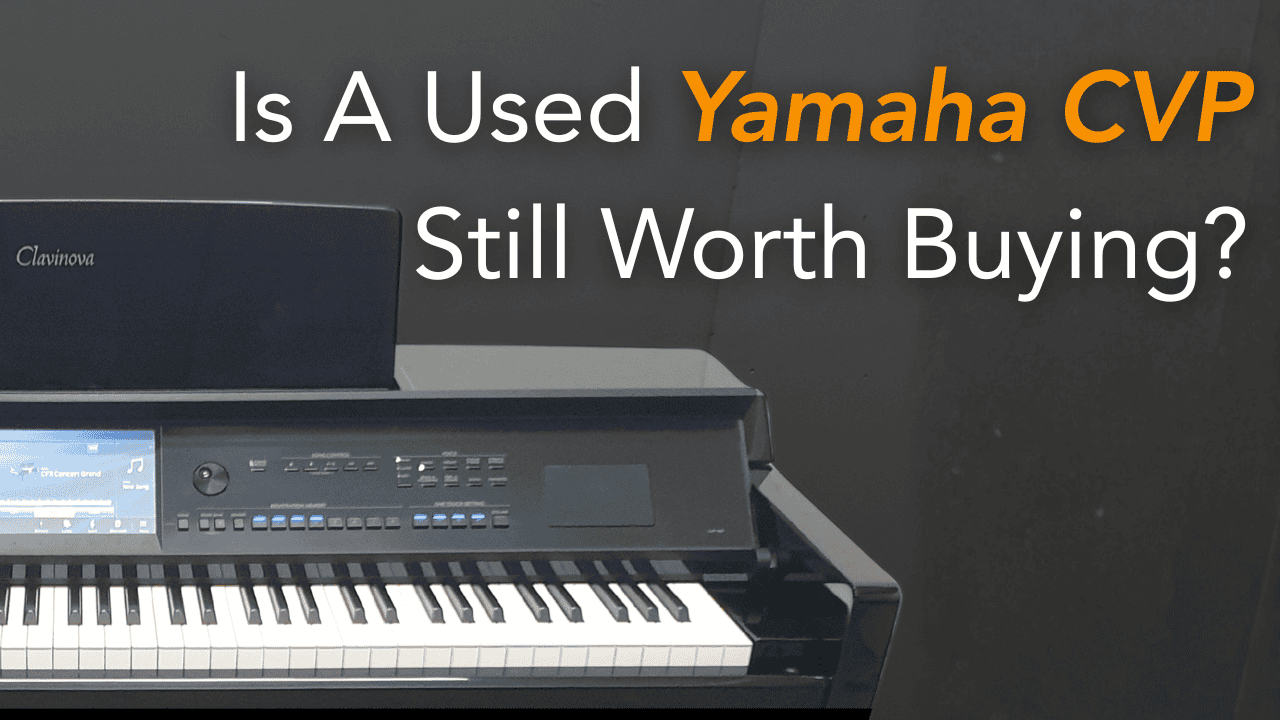
There’s something slightly dangerous about a Yamaha CVP.
You sit down thinking, “I’ll just play a bit of piano.”
Five minutes later, you’ve got drums, bass, strings, a choir, a saxophone solo, and the faint feeling that you’ve accidentally joined a cruise ship band.
And that, really, is the joy of the CVP range.
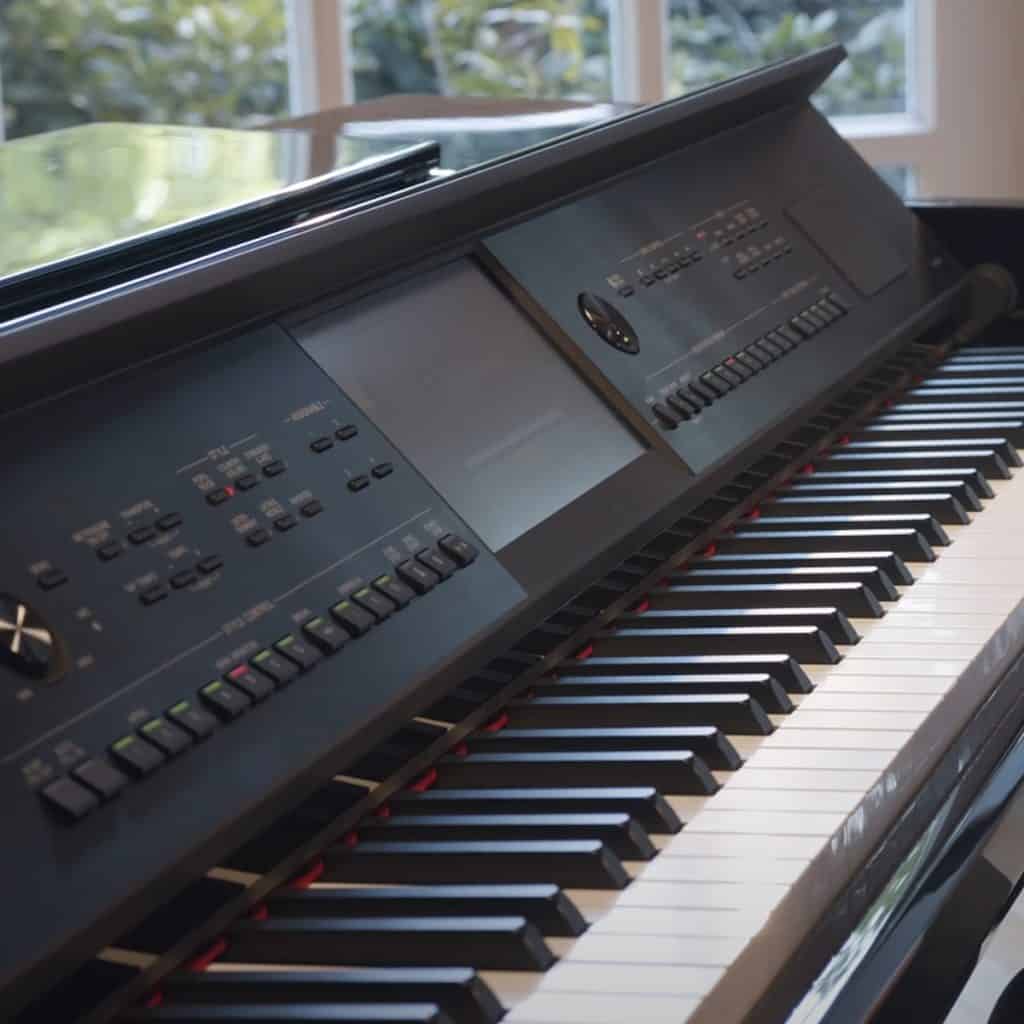
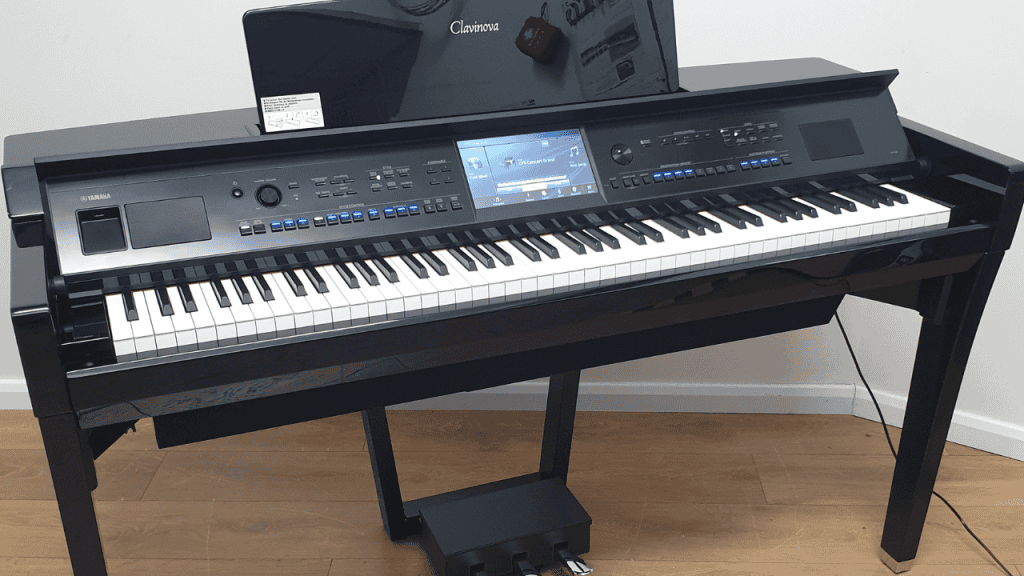
A Yamaha Clavinova CVP is not just a digital piano. It is a piano, arranger keyboard, backing band, recording tool and musical rabbit hole all rolled into one very polished cabinet.
So the question is: if you see a used Yamaha CVP for sale, is it still worth buying?
Honestly? Quite often, yes.
In fact, a good used CVP can be one of the best bang-for-your-buck buys in the whole digital piano world.
You just need to buy the right one.
Used Doesn’t Mean Tired
I think people sometimes hear the word “used” and imagine something wheezing in the corner like an old photocopier.
That really isn’t how we look at used CVP pianos.
A good used Yamaha CVP can still feel incredibly special. These were premium instruments when new, and many have lived very gentle lives in people’s homes.
They are not usually the sort of thing someone has thrown into the back of a van after a pub gig with three pints of lager inside it.
Most have sat in a lounge, been loved, polished, admired, and occasionally used to play “Memory” from Cats with a full string section behind it.
Which, frankly, is exactly what they were born to do.
The Big Thing: Bang For Your Buck
This is the main reason used CVPs make so much sense.
You can get a serious piece of Yamaha kit that does an awful lot, often for a fraction of the cost of a new one.
And that matters, because CVPs were never budget instruments. They were built as premium, feature-packed Clavinovas. Proper piano feel, big speaker systems, accompaniment styles, hundreds of sounds, recording features, screens, pedals, and more buttons than most people know what to do with.
Even an older CVP can still feel like a huge amount of instrument for the money.
In fact, this is where it gets interesting.
If you are looking at used CVPs, don’t just think in terms of age. Look at where the model sat in the range.
As a rough rule, the ‘09’ models are the ones to pay attention to. Models like the CVP-509, CVP-609, CVP-709 and CVP-809 were higher-spec instruments in their generation.
So, in many cases, an older ‘09’ model can be a smarter buy than a newer lower-spec ‘05’ or ‘01’ model.
That surprises people, but it makes sense.
A top-of-the-range instrument from a few years ago is still a top-of-the-range instrument. It may not have every latest feature, but the quality, speaker system, build and overall experience can still be seriously impressive.
They Still Hold Their Own
I remember seeing a seasoned keyboard player sit down at a Yamaha CVP-509.
This was someone who knew keyboards. Not someone easily impressed by a flashing button and a bossa nova style.
But when he started playing it, his eyes properly lit up.
The funny bit was that he was even more surprised when he found out when that model was originally launched.
That says a lot.
Older CVPs can still sound fantastic. They still feel musical. They still have that Yamaha polish. And they still do what CVPs have always done best: make playing feel bigger, fuller and more enjoyable.
That is testament to Yamaha, really.
A good instrument does not suddenly become rubbish just because a newer one comes out. Technology moves on, of course it does. Newer models will bring better screens, newer sounds, updated features and smoother interfaces.
But the heart of the CVP idea has been strong for a long time.
You sit down, choose a sound, pick a style, play some chords, and suddenly the instrument starts following you.
It fills out your playing.
It makes you feel like there is a band behind you.
And for a lot of players, that is still absolute magic.
A used CVP is especially good for someone who wants more than a straight piano.
If you only ever want to play classical piano pieces with no distractions, then a Yamaha CLP might be the better route. Lovely piano sounds, weighted keys, clean design, no temptation to spend forty minutes pretending to be the horn section from Earth, Wind & Fire.
But if you like the idea of exploring styles, playing along with backing, using different instrument sounds, arranging songs or just making music feel a bit more alive, the CVP makes a lot of sense.
It is brilliant for players who want a proper home piano with extra creativity built in.
It is also a great option for people who used to play organ or keyboard and want something more piano-like.
And honestly, it is perfect for anyone who likes pressing buttons and going, “Ooh, that’s nice.”
Be Careful Buying Privately
This is where I’d be slightly careful.
Buying a used Yamaha CVP privately can be tempting. You might see one online and think you’ve found the bargain of the century.
Sometimes you have.
Sometimes you’ve found a very heavy mystery box.
And with a CVP, that matters.
These are big, complex instruments. They have pedals, screens, speakers, buttons, styles, voices and all sorts of clever things going on under the hood.
So when you buy privately, you need to think about more than just the price.
What happens if something is not quite right?
How are you getting it delivered safely?
Has it been checked properly?
Is everything working?
Is there any warranty?
And, perhaps most importantly, who do you call when you get it home and realise you have accidentally turned on a samba rhythm and cannot work out how to turn it off?
That is where buying from a specialist makes a big difference.
At ePianos, our used instruments are checked, prepared and sold with proper advice behind them.
Warranty, delivery and quality are all things we take seriously.
And with a machine like a CVP, that support really matters. There are lots of buttons, lots of possibilities, and plenty of moments where a helping hand can save you from wanting to throw the manual into the garden.
With us, you are always at the end of a phone.
With eBay, you’ll be lucky to get a receipt.
Should You Buy New Instead?
Sometimes, yes.
If you want the latest sounds, the newest features, the cleanest interface and the longest possible future ahead of the instrument, then a new Yamaha CVP is absolutely worth considering.
But that does not automatically mean used is the poor relation.
A good used CVP can still be a serious, premium, inspiring instrument.
In some cases, it can be the sweet spot: enough features to keep you entertained for years, enough quality to feel special, and enough saving to make the whole thing feel sensible.
Sensible, but still a little bit ridiculous.
Which is exactly where the CVP lives best.
Final Thought
So, is a used Yamaha CVP still worth buying?
Yes — if it has been properly checked, if it suits the way you want to play, and if you buy it from somewhere that can support you after the sale.
Because the magic of a CVP is not just in the spec sheet.
It is in that moment where you sit down to play one song, accidentally add a full backing band, change the strings twice, try a jazz style, lose half an hour, and remember that music is supposed to be fun.
That is why used Yamaha CVPs still make so much sense.
They are not just old digital pianos.
They are very capable little musical universes, usually disguised as respectable furniture.
Browse our current used Yamaha piano range here:
Or come and try one at ePianos. We’ll help you work out whether a used CVP is genuinely right for you, or whether you’re just being seduced by the buttons.
Which, to be fair, happens to the best of us.
Sign up to our Newsletter
Enter your email address below to receive our free weekly newsletter containing the latest piano,
keyboard and organ demonstration videos, breaking news, special offers, invitations to our live video
events, technical support articles and much more.
Isaac Stuart
Sales at ePianos
Isaac is one of our longest-serving sales team members, and is a gifted musician and actor. He has a wealth of product knowledge and experience overseeing a range of promotional content via social media and email. You’ll also see him in a number of our ePianos Youtube demonstration videos.
For more detailed information regarding delivery and returns, including our 14-day returns policy,
please click here.
Please note: UK mainland DOES NOT include the Channel Islands, or the Scottish
Highlands. Surcharges may apply, so please contact us for more information before purchase.
Additionally, our in-house team, courier delivery, and postal services neither deliver nor collect on Bank
Holidays, so there will be a delay during these periods.
Special Order items
These items are sold on behalf of Yamaha, and are sent to us on a per-order basis, typically within 5-7 working days, unless an ETA is otherwise stated.
We'll contact you the moment your purchase arrives with us to organise delivery, based on your selected option.
Brand new products over 30kg
Example products: Yamaha DGX670, Yamaha P-525, Yamaha YDP-S55, Yamaha Clavinova.
These items must be sent with a heavy-goods courier (typically APC or FedEx). On occasion, depending on which is fastest, we will drop-ship directly from Yamaha to your address via Dachser.
Tracking will be provided by the haulier, with a typical arrival time of 1-2 working days.
*If you have included the optional £180 "Yamaha Premium Service" home delivery & setup option offered on selected products, we will contact you regarding arrangements after purchase.
**The Yamaha CSP Series, Yamaha CVP905 & CVP909, Yamaha CLP875, 885 & 895GP, and Yamaha NU1Xa are all sold on behalf of Yamaha and arrive with us on a per-order basis. As soon as your piano has arrived, we will contact you to organise the appropriate dispatch method. ETA for stock is shown on the product page for those items.
***If you have included the optional £99 home delivery & setup option offered on selected products, we will send your details direct to the installation team, who will contact you within 48 hours to make arrangements.
Used or display products over 30kg
Depending on which option is most appropriate, we will either contact you to discuss a bespoke ePianos delivery surcharge for goods we can’t package for a 3rd party courier, or otherwise dispatch goods via FedEx or APC.
If a courier is used, tracking will be provided by them directly, with a typical arrival time of 1-2 working days.
All products under 30kg
Example products: Yamaha PSR-SX920, Yamaha P-225, Yamaha NP-15.
These items will be sent via courier (typically APC or FedEx). On occasion, depending on which is fastest, we will drop-ship directly from Yamaha to your address via UPS or Parcelforce.
Tracking will be provided by the courier, with a typical arrival time of 1-2 working days.
Smaller items, such as books, discs, etc, will be dispatched via Royal Mail second class.
Downloadable Content
After purchase, you can download the file either from the order confirmation page or the "Downloads" tab in "My Account".
If you have selected the option to receive a pre-loaded USB stick, then this will be dispatched via Royal Mail.
Pre-orders
We will contact you regarding any pre-ordered items, and let you know when they arrive so as to arrange delivery with you at a convenient time.
We offer interest-free and interest-bearing finance options on selected products.
Finance options for new products
2–5 years interest-bearing finance at 19.9% APR (minimum 10% deposit).
A minimum loan amount of £500 after deposit is required.
Finance options for used products
Used items can also be purchased using either of the following options
(minimum loan amount of £250 after deposit):
10 months at 0% APR (minimum 50% deposit)
6 months at 0% APR (minimum 10% deposit)
Representative Example
Cash price: £700
Deposit: £70
Loan amount: £630
APR representative: 19.9%
Interest rate: 19.9% p.a. fixed
36 monthly repayments of: £22.87
Total loan term: 36 months
Total amount payable: £893.32
Available finance options are displayed at checkout. Alternatively,
please get in touch
and we’ll be happy to discuss the options, or email a finance application to you. Find out more by clicking here
Seasonal Hours
Our seasonal opening hours are as follows:
Christmas Eve: 10am to 1.30pm
Christmas Day: Closed
Boxing Day: Closed
New Year's Eve: 10am to 1.30pm
New Year's Day: Closed
Bank Holidays
We are closed on all bank holidays, therefore the processing of sales and deliveries will be delayed.
Tyros Tipsters Bonus Content for Tyros 5
Here's what we offer when you select the option to include our Bonus Content...
We update the firmware so that your Yamaha Tyros 5 is running on the latest version
We load in 600 registrations into the Tyros 5 which give you sound set-ups in your
registration bank buttons for different genres of music
We add 1825 songs into the Tyros 5 Music Finder
Contact Us
We are pleased to be able to offer interest-free finance on selected products through Novuna Personal Finance, for a limited period only.
This offer is available on purchases of:
Brand New Yamaha Genos 2
Brand New & Used Yamaha SX920 (if purchased with bonus content & guide)
Used Yamaha SX900 (if purchased with bonus content & guide)
Used Yamaha Genos 1 (if purchased with bonus content & guide)
Get in touch to request a remote 0% finance application with or without a part-exchange using the form below:
Here's what we offer when you select the option to include our Bonus Content...
Latest Firmware
27 Expansion packs which include 557 voices and 381 backing styles
234 extra styles from Tyros 5
600 registrations
2673 song setups
Video showing where all the key features are
...and when you select the option to include our GenosTipsters Guide
We include our GenosTipsters guide (digital version) worth £99,
featuring over 3 hours of video and 200 pages of written accompaniment.
Disclaimer – a proportion of this content is made available freely by Yamaha,
for those fully competent and confident with using the required software to install it via computer.
Information about this item
For orders of any stock displaying a 7-10 day lead time, we will contact you as soon as the item arrives with us to schedule a delivery with you.
Occasionally, there may be availability issues with our suppliers, in which case we'll get in touch with you to see if you're happy to wait, or if you'd like to cancel the order and receive a full refund.
Information about this item
This is a special order "agency" item, and comes to us directly from Yamaha on a per-order basis.
It typically takes 7-10 days for this item to arrive with us, whereupon we'll contact you to discuss the arrangement of delivery.
Information about this item
For any pre-orders, we will contact you as soon as the item arrives with us to schedule a delivery with you, and update you with an ETA.
Occasionally, there may be availability issues with our suppliers, in which case we'll get in touch with you to see if you're happy to wait, or if you'd like to cancel the order and receive a full refund.
Get up to £250 cashback from Yamaha*
Yamaha is offering customers cashback on selected purchases until January 15th 2026 - here's how it works:
Purchase a qualifying Yamaha instrument before 15.01.26.
Complete the claim form
following this link
and have your proof of purchase and serial number ready.
Once your claim has been validated, you will be sent within 35 working days your cashback reward via bank transfer.
*Cashback amount varies product to product, as indicated.
Available Content for Genos 1
Here's what we include when you select the option to add our Bonus Content...
Latest Firmware
23 extra expansion packs which include 877 voices and 577 backing styles
234 extra styles from Tyros 5
600 registrations
4096 song setups
Video showing where all the key features are
...and when you select the option to include our GenosTipsters Guide
We include our GenosTipsters guide (digital version) worth £99,
featuring over 3 hours of video and 200 pages of written accompaniment.
Disclaimer – a proportion of this content is made available freely by Yamaha,
for those fully competent and confident with using the required software to install it via computer.
Part Exchange
Genos Tipsters Bonus Content for SX900
Here's what we offer when you select the option to include our Bonus Content...
Latest Firmware
14 Expansion Packs inc many extra voices and styles
234 T5 styles
600 registrations
T5 Music Finder
15 Playlists with 2287 song set-ups
Video showing where all the key features are
...and when you select the option to include our GenosTipsters Guide
We include our GenosTipsters guide (digital version) worth £99,
featuring over 3 hours of video and 200 pages of written accompaniment.
Disclaimer – a proportion of this content is made available freely by Yamaha,
for those fully competent and confident with using the required software to install it via computer.
Available Bonus Content for SX920
Here's what we offer when you select the option to include our Bonus Content...
Latest Firmware
25 Expansion packs which include 780 voices and 540 backing styles
234 extra styles from Tyros 5
600 registrations
4256 song setups including 136 ‘Decades’ registrations
Video showing where all the key features are
...and when you select the option to include our GenosTipsters Guide
We include our GenosTipsters guide (digital version) worth £99,
featuring over 3 hours of video and 200 pages of written accompaniment.
Disclaimer – a proportion of this content is made available freely by Yamaha,
for those fully competent and confident with using the required software to install it via computer.
Bonus Content for Korg Pa5X
Here's what we include when you select the option to add our Bonus Content...
Korg Bonus Styles (Taken from the Bonusware downloads on Korg UK website) – 450 styles
Korg Pa2x Internal Styles converted to 5x – 419 styles, all complete with 4 x Keyboard Sets
Korg Pa3x Internal Styles converted to 5x – 486 styles, all complete with 4 x Keyboard Sets
Korg Pa4x Internal Styles converted to 5x – 584 styles, all complete with 4 x Keyboard Sets
Korg Pa800 Internal Styles converted to 5x – 409 styles, all complete with 4 x Keyboard Sets
Korg Musikant 4x Internal Styles converted to 5x – 577 styles, all complete with 4 x Keyboard Sets
ePianos Songbook for Pa5x – A collection of over 200 well-known songs with 4 Keyboard Sets per song, giving in
excess of 800 registrations
Latest Osimo Songbook from Korg
3 x User Sound Packs from Korg
6 x Korg Pa5x User Know How videos covering: "Power Up & Panel", "Selecting Styles", "Selecting Sounds", "My
Setting & Favourites", "Mixer Basics", "Songbook", and "Recording"
How to Locate and Load the Various Software Bundle Components (Video)
Available Bonus Content for Genos 2
Here's what we offer when you select the option to include our Bonus Content:
Latest Firmware
52 expansion packs which include 1,721 voices and 1,148 backing styles
234 extra styles from Tyros 5
816 registrations
4256 song setups including 160 ‘Decades’ registrations
Video showing where all the key features are
Some of the best parts of our Bonus Content option are the 1,721 new extra voices and 1,148 new extra styles
included
across 52 expansion packs. These packs are quite complex to upload and, whilst free to obtain, we pride ourselves on
getting them into your keyboard for you — something many dealers shy away from purely because of the time it takes
to get them uploaded.
...and when you select the option to include our GenosTipsters Guide:
We include our GenosTipsters guide (digital version) worth £99,
featuring over 3 hours of video and 200 pages of written accompaniment.
Disclaimer – a proportion of this content is made available freely by Yamaha,
for those fully competent and confident with using the required software to install it via computer.















Comments: